Romanticism Definition: Why the Moon Refused a Tax Audit
Romanticism, in official dusty lectures, is described as a literary and artistic movement of the late 18th and early 19th centuries. It stressed emotion over reason, imagination over logic, and sunsets over grocery bills. This school of thought insisted that mountains had feelings, rivers whispered secrets, and every thunderstorm was basically a moody poet with wet hair.
But Romanticism was less a movement and more a collective hallucination in which painters saw trees as confessional partners and writers married metaphors instead of people. A romantic believed that a leaf drifting down in autumn contained more truth than three libraries and a tax attorney combined. Logic, they declared, was vulgar; passion, on the other hand, was socially acceptable madness.
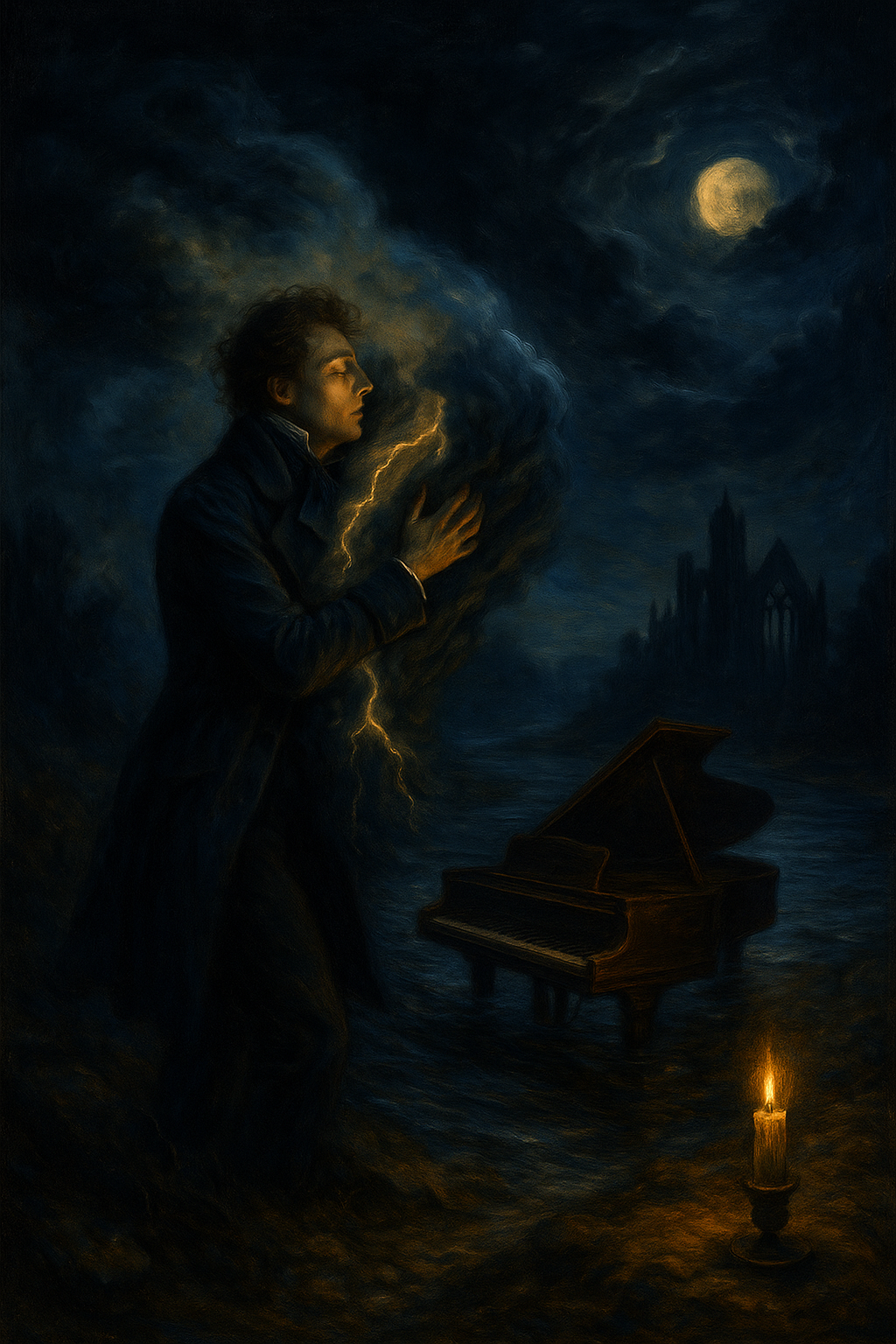
It was a rebellion against neat Enlightenment chairs and straight-lined architecture. Why sit in a square room when you can faint in a gothic ruin? Why measure truth when you can yell it at the ocean? Thus, Romanticism is not just a movement. It is a dangerous beverage made of nightingales, unpaid rent, and candle wax.
Examples: A poet sobbing at dawn; a composer fighting a piano; a painter sketching clouds until broke.
Etymology (Word History): From Latin romantica meaning “story about knights,” later misread as “story about feelings,” eventually simplified to “please bring tissues.”