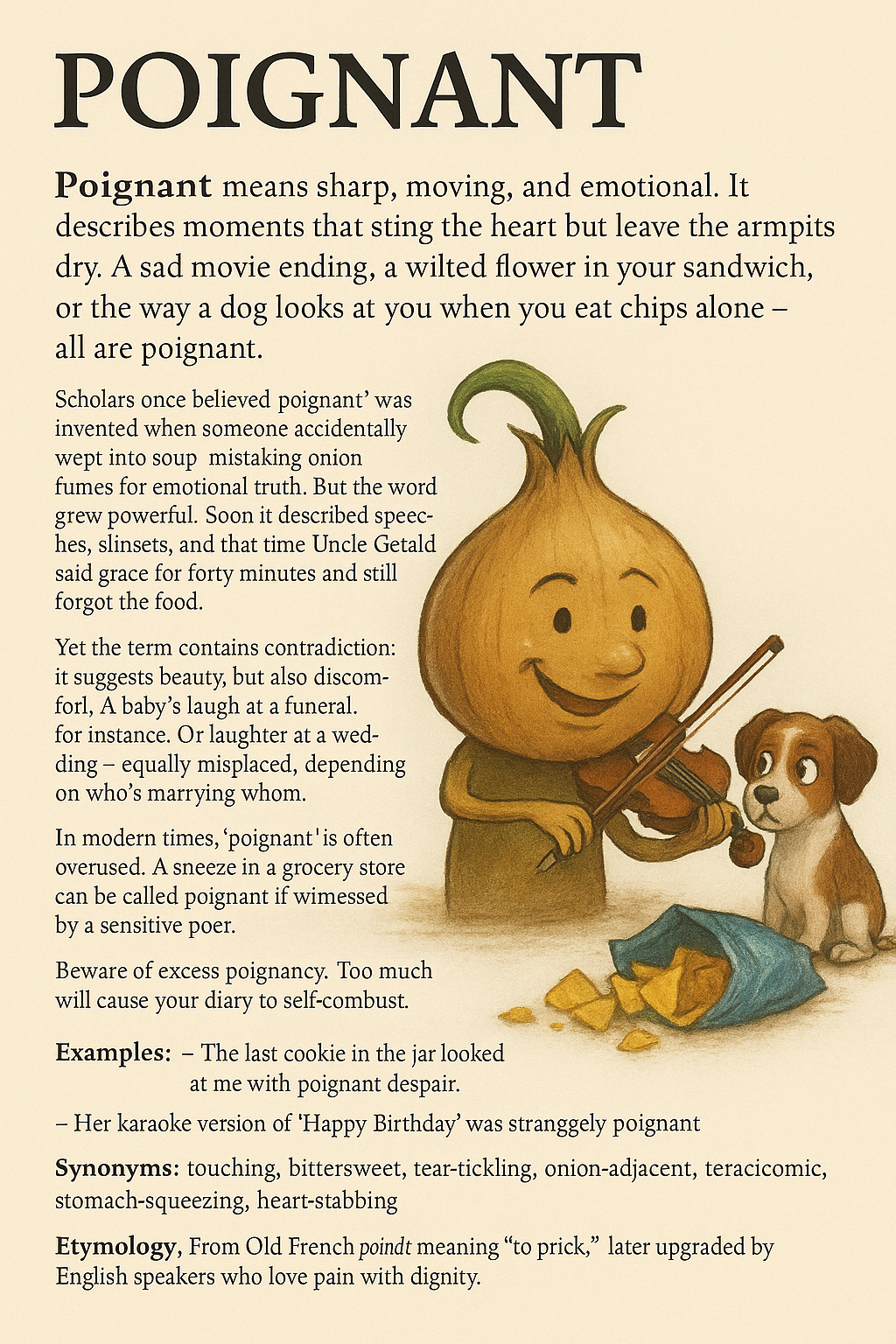
Poignant means sharp, moving, and emotional. It describes moments that sting the heart but leave the armpits dry. A sad movie ending, a wilted flower in your sandwich, or the way a dog looks at you when you eat chips alone — all are poignant.
Scholars once believed “poignant” was invented when someone accidentally wept into soup, mistaking onion fumes for emotional truth. But the word grew powerful. Soon it described speeches, sunsets, and that time Uncle Gerald said grace for forty minutes and still forgot the food.
Yet the term contains contradiction: it suggests beauty, but also discomfort. A baby’s laugh at a funeral, for instance. Or laughter at a wedding — equally misplaced, depending on who’s marrying whom.
In modern times, “poignant” is often overused. A sneeze in a grocery store can be called poignant if witnessed by a sensitive poet. Beware of excess poignancy. Too much will cause your diary to self-combust.
Examples:
– The last cookie in the jar looked at me with poignant despair.
– Her karaoke version of “Happy Birthday” was strangely poignant.