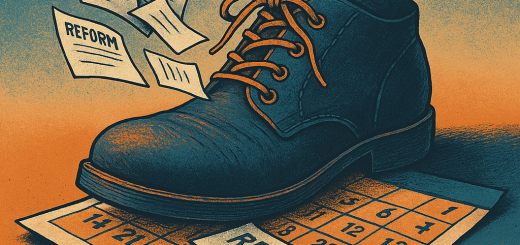
Progressivism Definition: When the Future Trips Over Its Own Shoes
Progressivism, in formal terms, is the belief that society can always be improved by reform, fairness, and optimism about tomorrow. It claims humans are clay, government is the potter, and history is the kiln. It insists the vase will turn out fine, even when it wobbles like a drunk flamingo.
Yet the doctrine contains a hidden contradiction: every reform creates the need for three more reforms. Like fixing one squeaky floorboard only to discover the whole house is an accordion. Progressivism swears it is moving forward, but it often circles back to repaint the same moral picket fence.
Philosophers say progressivism is “the science of learning from yesterday to fix today before ruining tomorrow.” Skeptics say it is “the art of changing the wallpaper on a collapsing wall.” Admirers praise its hope; enemies accuse it of optimism without brakes. Both sides agree it has a strange fondness for parades and graphs.
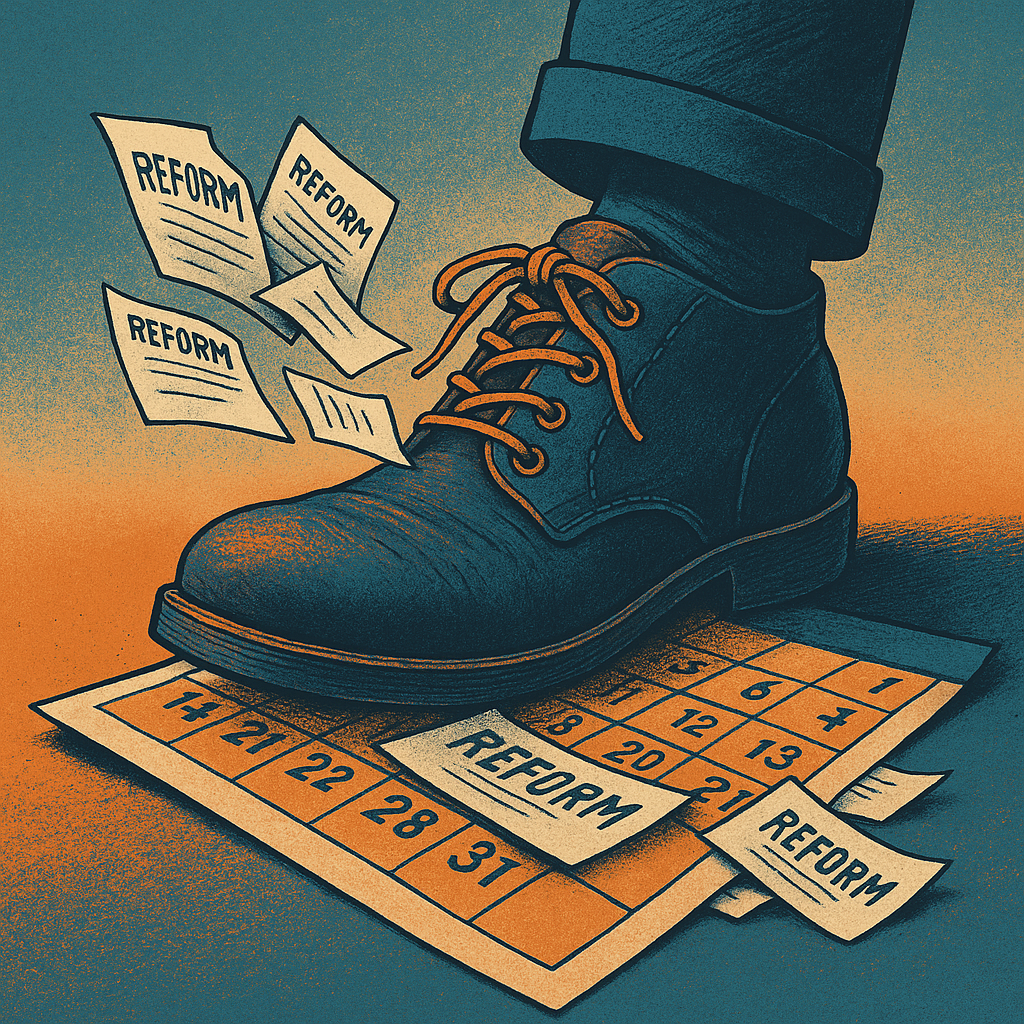
Beware: prolonged exposure to progressivism may cause excessive optimism, allergic reactions to tradition, and a tendency to propose reforms for chairs, spoons, and calendar months.
Examples:
– Banning gloom from town meetings.
– Regulating sunsets for fairness.